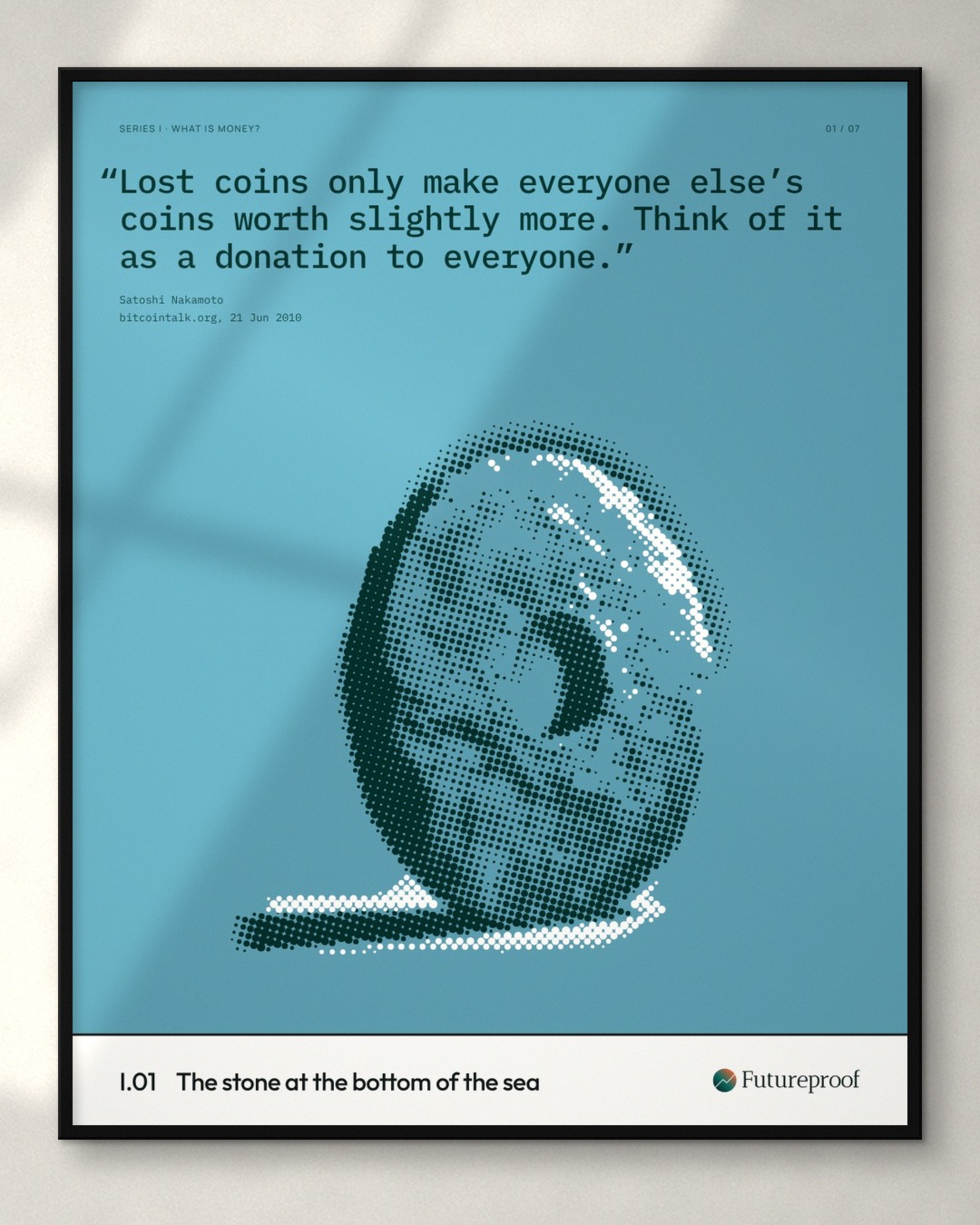
Lost coins only make everyone else's coins worth slightly more. Think of it as a donation to everyone.Satoshi Nakamoto, bitcointalk.org, 21 Jun 2010
The stone at the bottom of the sea
The story
On the island of Yap in the western Pacific there was no limestone. It was found on Palau, some 400 kilometres away across open sea. There the Yapese carved large round discs with a hole in the middle, some wider than a person is tall, and carried them home in canoes and on rafts. The discs were called rai, and they were the island's money.
The value was not only in the size. A stone that had cost lives to fetch was worth more than one that had come easily. The story of the stone travelled with the stone, and everyone on the island knew it.
That was also why the stones were rarely moved. When a rai changed hands it usually stayed where it stood, outside the house or at the village meeting place. What changed was what people knew: now it belonged to someone else. Ownership lived in the shared memory, not in the stone.
The American anthropologist William Henry Furness stayed on Yap in 1903 and wrote down a story that shows how far this went. One family owned an unusually large stone that had sunk at sea on the way home from Palau, generations earlier. No living person had seen it. Still the family counted as rich. Everyone knew the stone was on the seabed, everyone knew whose it was, and that was enough. The stone worked as money without anyone being able to touch it.
The economist Milton Friedman wrote a short piece about Yap in 1991 and drew a line to something that happened in Europe in 1932. France wanted its gold back from the United States. Instead of shipping it, officials at the Federal Reserve went down into the vault in New York, relabelled a number of crates and noted that they were now French. The gold stayed on the same shelf. The newspapers wrote about the loss of gold, the dollar weakened, and not one bar had moved a centimetre.
The difference from Yap was not the principle. It was only that the ledger was kept by a bank instead of by a whole island.
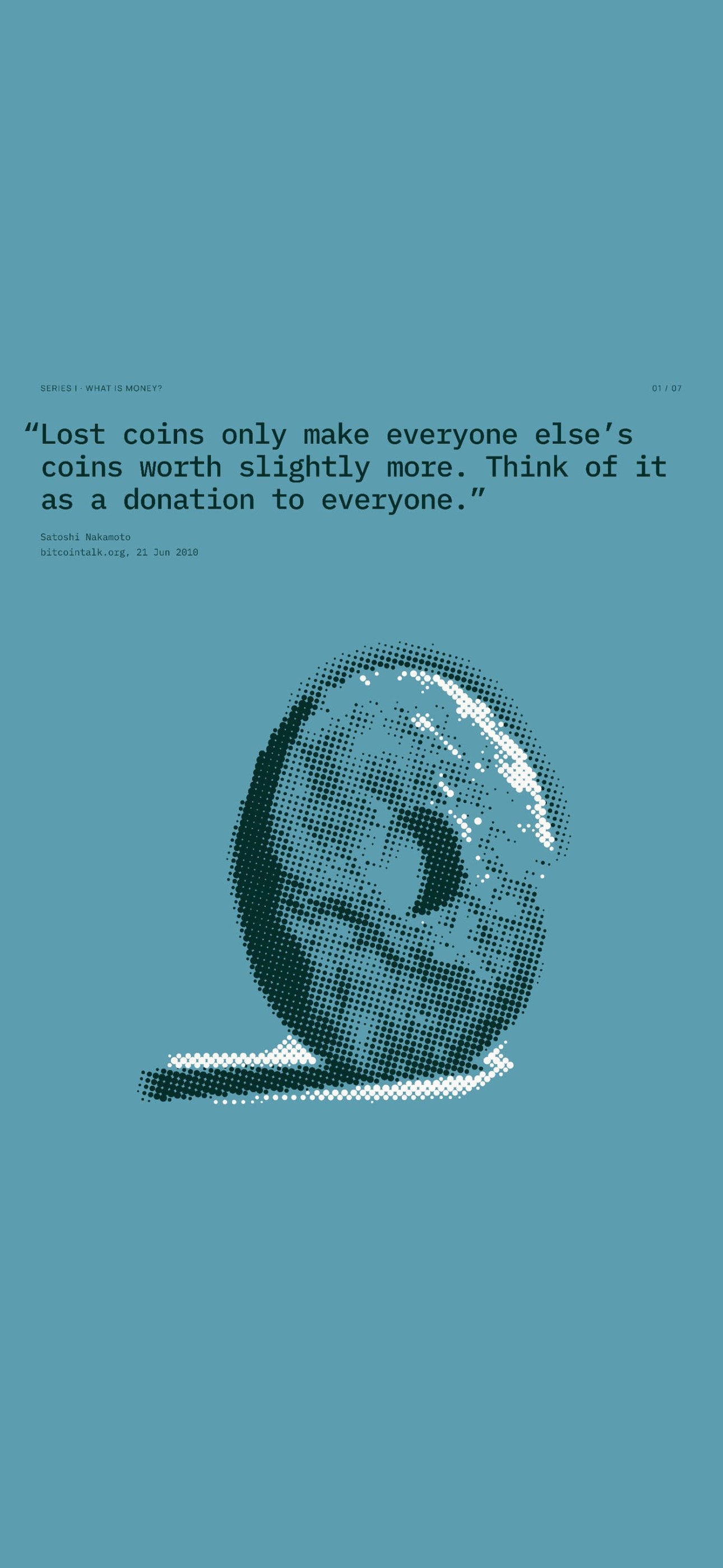
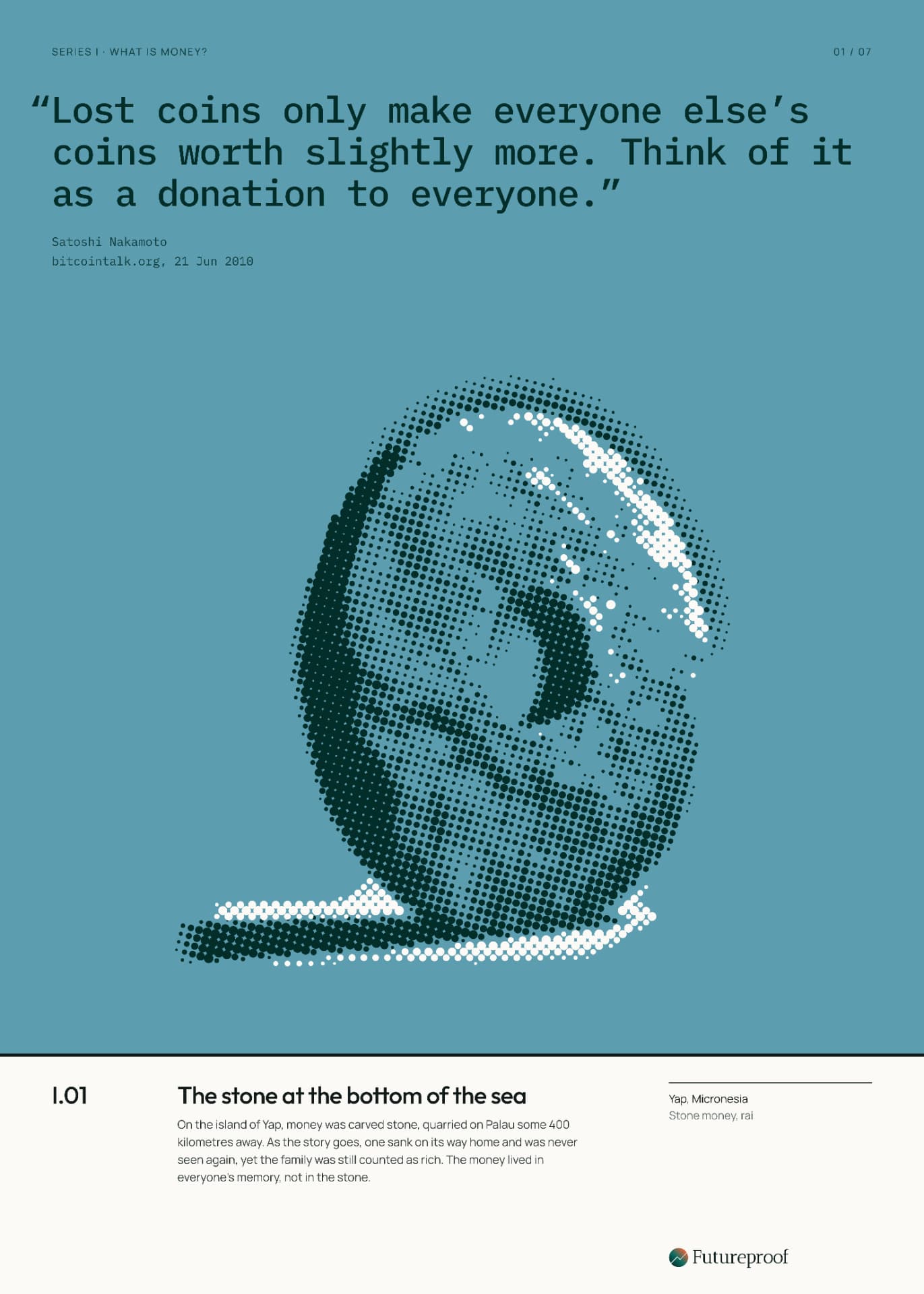
The quotation on the poster is from the summer of 2010. Satoshi Nakamoto was answering a question about what happens to bitcoin that are lost when someone loses their key. The answer was that they do not disappear in any way that matters. The number is fixed, so what remains becomes slightly more valuable for everyone else. Like the stone on the seabed: no one can use it, but everyone knows it is there, and that is enough for it to count.
Download
Free for personal use. Not for resale.
Be there from the start
The service has not launched yet. Join the waitlist and we will be in touch when we open.
Investing involves risk. Your savings can go both up and down in value.